What if growing your money didn’t mean compromising your values? That’s really what sustainable investing is about—making sure your money is working toward something you believe in, not just sitting in some random fund you picked once and forgot about.
If you’ve ever looked at your 401(k) or retirement account and wondered, “Wait… what exactly am I invested in?”—you’re not alone. I’ve been there too. And the good news? You don’t need a finance degree (or a billionaire mindset) to start investing in a way that feels good.
In this guide, we’ll break down what sustainable investing actually means, how it works, and how you can get started—no spreadsheets, no lectures, no pressure. Just a gentle, beginner-friendly way to grow wealth that aligns with your values.
1. What Is Sustainable Investing?

In plain English? It’s growing your money while being intentional about how you grow it.
Sustainable investing means putting your dollars toward companies that are trying to do good—like reducing pollution, treating employees well, or being honest about their business practices.
There’s a framework called ESG, which stands for:
- Environmental: Is the company doing its part to reduce harm to the planet?
- Social: Does it treat people—workers, customers, communities—ethically?
- Governance: Is it well-run, transparent, and accountable?
If you care about any of those things, you’re already on the right path. You may also hear other terms like:
- Ethical investing
- Socially responsible investing (SRI)
- Impact investing
They all overlap, but don’t worry—we’ll focus on what matters most if you’re just getting started: how to invest in ways that feel good and grow strong.
Common Types of Sustainable Investments
So you’re on board with the idea—but what does sustainable investing actually look like in practice?
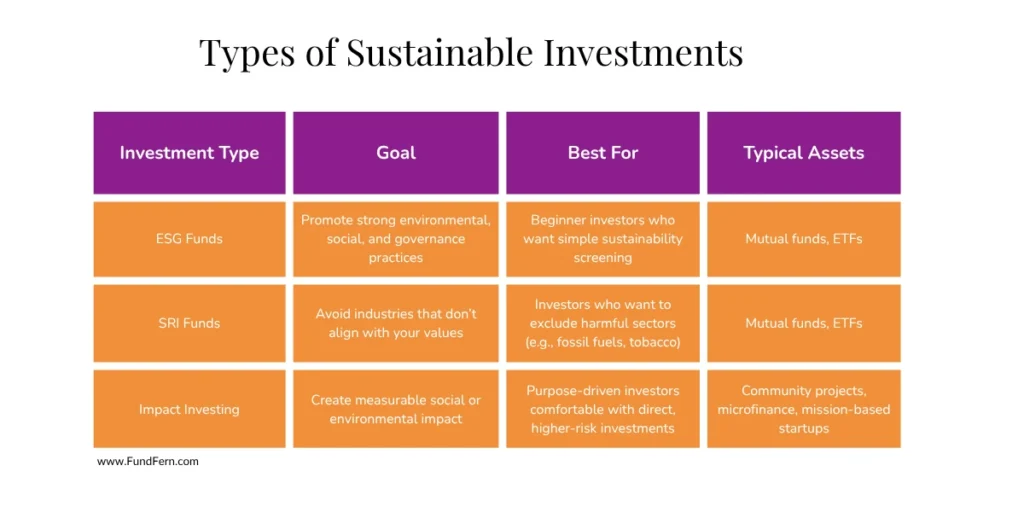
Here are a few of the most popular ways to invest with your values in mind:
ESG Funds (Environmental, Social, Governance)
These are mutual funds or ETFs that screen companies based on how they perform in key ESG areas. Think of them as “pre-filtered” baskets of stocks that aim to do good and do well.
Pro tip: ESG doesn’t mean perfect—it just means the companies meet certain standards based on sustainability and ethics.
Socially Responsible Investing (SRI) Funds
These funds take it a step further by excluding certain industries—like fossil fuels, tobacco, or weapons. If you want your investments to completely avoid things you strongly oppose, SRI might be your style.
Green Bonds
Green bonds are loans issued by governments or corporations to fund eco-friendly projects—like solar energy, clean water, or public transportation. Your investment helps fund real-world solutions.
Impact Investing
This is for people who want to invest directly in companies or projects that aim to create measurable social or environmental change—like microloans for women entrepreneurs or affordable housing programs. It’s higher-impact, and sometimes higher risk.
Sustainable ETFs
Exchange-traded funds that focus on sustainability themes—like clean energy, water, or gender equity—are super beginner-friendly and widely available through platforms like Fidelity, Betterment, and M1 Finance.
How to Know If Sustainable Investing Is Right for You
You don’t have to be an environmental activist or finance pro to invest with purpose. You just have to care—and want your money to support the kind of world you believe in.
Here are a few signs that sustainable investing might be a good fit for you:
You want your investments to mean something
If you’ve ever looked at your savings and thought, “I wish this was doing more than just sitting there,” sustainable investing gives you that option.
You care about things like the planet, people, or equity
Whether it’s climate change, workers’ rights, or supporting ethical companies—you want your money to reflect your values, not undermine them.
You prefer calm confidence over high-stakes risks
Sustainable investing doesn’t mean sacrificing growth—it just means you’re more mindful about how you grow.
You like the idea of voting with your wallet
Where your money goes matters. And investing is just another way to cast a vote for the kind of companies you want to see thrive.
Meet James
James, a 35-year-old nurse, never paid much attention to his retirement account. One day, he looked closer and realized his 401(k) was heavily invested in oil and tobacco. It didn’t sit right. He talked to his HR department, switched to a sustainable index fund, and hasn’t looked back.
Now, his money’s still growing—but in a way that feels aligned with who he is.
How to Start Sustainable Investing (Step-by-Step)
Ready to align your money with your values? Good news: it doesn’t have to be complicated, expensive, or overwhelming. Here’s a friendly roadmap to get you going:
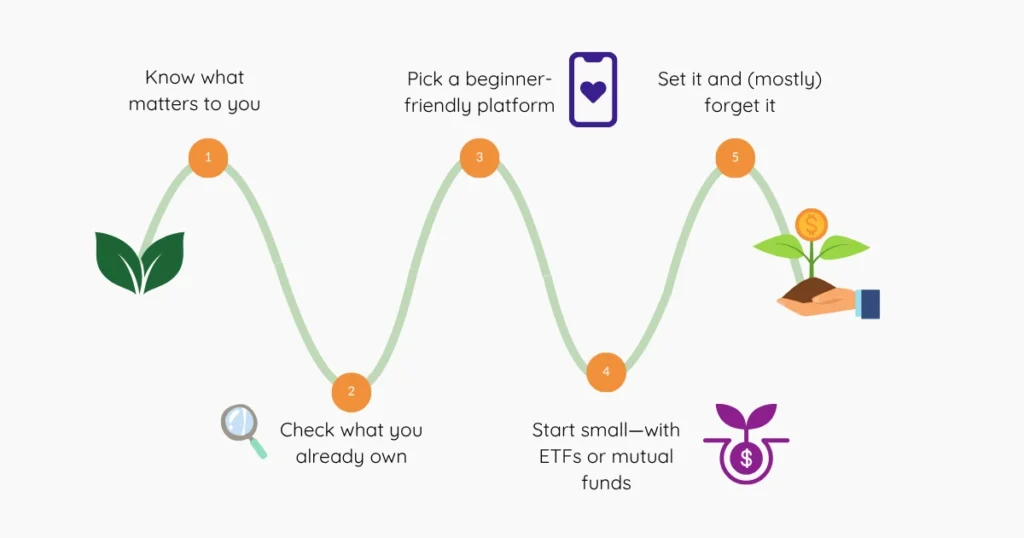
Step 1: Know what matters to you
Are you most concerned with climate change? Human rights? Corporate transparency?
There’s no one-size-fits-all—so take a moment to reflect on the values you’d want your investments to support (or avoid).
Step 2: Check what you already own
If you’ve got a 401(k), IRA, or brokerage account, dig into where your money is currently invested. Many platforms show fund names like “ESG” or “Sustainable,” and some offer sustainability ratings. If you’re not sure, it’s totally okay to ask.
Step 3: Pick a beginner-friendly platform
Some investing apps and brokers offer built-in sustainable options. A few to consider:
- Fidelity or Vanguard: offer ESG funds and screeners
- Betterment: offers socially responsible portfolios
- Ellevest: designed for women, includes impact investing options
- M1 Finance: lets you build your own ethical “pie” of investments
Tip: Look for platforms with low or no fees and intuitive dashboards.
Not sure which platform to use? Check out our breakdown of the Best Investing Apps for Beginners to find one that fits your style.
Step 4: Start small—with ETFs or mutual funds
You don’t have to hand-pick stocks to invest sustainably. Start with an ESG ETF or a socially responsible mutual fund. Many let you start with $50–$100—or even less with fractional shares.
Step 5: Set it and (mostly) forget it
Set up auto-deposits, rebalance annually if needed, and avoid the temptation to micromanage. Long-term, consistent investing almost always beats emotional highs and lows.
Need help figuring out how much you can invest each month? Try our Monthly Budget Calculator to free up extra funds for your future.
Want to brush up on the basics first? Check out our beginner-friendly guide: Investing for Beginners: How to Grow Your Money with Confidence
Is There a Downside to Sustainable Investing?
Let’s keep it real—no investing approach is perfect. Sustainable investing is powerful, but it’s important to go in with your eyes open. Here’s what to consider:
Not all “sustainable” funds are created equal
Some funds slap on the “ESG” label without truly aligning with sustainable values. (It’s called greenwashing—and yes, it’s as shady as it sounds.)
Tip: Look for funds with third-party ratings, like Morningstar’s Sustainability Rating or MSCI ESG scores.
Fees may be slightly higher
Because ESG or SRI funds are actively screened, they sometimes have higher fees than traditional index funds. That said, many low-fee sustainable options are now available—just read the fine print before you buy.
Returns can vary—but that’s normal
Some years, sustainable funds might slightly underperform traditional ones. Other years, they outperform. Over the long run, many ESG funds have shown competitive returns. The key? Stay consistent and don’t panic over every dip.
It takes a little effort to start
You’ll spend a bit more time upfront choosing funds or reviewing your 401(k) options—but once it’s set up, it’s easy to maintain.
FundFern’s Take:
Sustainable investing isn’t a magic fix—it’s just a better option for people who want their money to do more good than harm. The small tradeoffs are often worth the peace of mind that comes from investing with intention.
FundFern’s Friendly Tips for Value-Driven Investing
You don’t have to overhaul your life or become a finance wizard overnight. Sustainable investing can be simple, slow, and still incredibly powerful. Here are a few encouragements for the journey:
Start small, stay steady
You don’t need a huge budget to make an impact. Even $20/month into a sustainable ETF adds up—and gets you into the habit of investing with purpose.
Progress beats perfection
Maybe your fund isn’t 100% perfect. That’s okay. Taking an intentional first step matters more than finding the “perfect” portfolio. You’re learning, and that’s powerful.
Be curious, not intimidated
Explore terms like ESG, impact investing, or shareholder advocacy when you’re in the mood—but don’t let unfamiliar jargon slow you down. You’re already doing great.
Automate when possible
Set up auto-transfers and let your money grow behind the scenes. You’ve got enough going on in your life—your investments don’t need to be one more thing to track every day.
Remember why you’re doing this
You’re not just investing for returns. You’re investing to build a future that feels right to you. That’s a big deal—and worth celebrating.
If long-term security and leaving a meaningful legacy are on your radar, you might also enjoy our guide to living trusts.
Frequently Asked Questions
Quick FAQs About Sustainable Investing
Closing Words
You’re not just growing wealth—you’re growing it on purpose. And that’s something to be proud of.
Sustainable investing lets you align your financial life with the kind of world you want to live in. Whether you’re starting with $20 or $2,000, what matters most is that you’re showing up, making choices, and learning as you go.
You’ve got this.
And FundFern’s here whenever you need a joyful nudge.