Investing often feels like a financial mountain reserved for the wealthy, the math-savvy, or people with time to obsess over markets. If that’s how you feel—you’re not alone. But here’s the good news: you absolutely can invest, even if you’re just starting out, don’t have a lot of extra cash, and break into a sweat when someone says “portfolio.”
This guide is here to make investing feel human. No suits. No stock market jargon. Just you, learning how to grow your money at your own pace—with clarity, confidence, and maybe even a bit of joy.
What Is Investing, Really?
At its core, investing is putting your money into something—like a company, government bond, or real estate—with the hope that it’ll grow over time. In exchange for that potential growth, you’re taking on some level of risk.
Compare that to saving: saving keeps your money safe and available, often in a bank with very low returns. Investing is like giving your money a job—ideally, one that earns more than a typical savings account could.
The goal isn’t just growth—it’s outpacing inflation, building wealth, and putting your money to work so you don’t always have to.
What Happens When You Don’t Invest?
It might feel safe to just keep your money in a savings account, but there’s a hidden cost: inflation. Each year, your money loses a little bit of its purchasing power. That $100 in the bank today won’t buy the same amount of groceries ten years from now.
Let’s say inflation averages 3% per year. In 20 years, your savings will have lost over 45% of its value—unless it’s growing.
Not investing means missing out on one of the most powerful tools for building financial security. Even a conservative investing plan helps your money keep pace with the cost of living—and gives it a chance to do more.
Why Start Investing Early (Even If It’s Just a Little)

Let’s say you invest $100 a month starting at age 25. With an average return of 7%, you’d have around $250,000 by the time you’re 65.
Wait until 35 to start? You’ll end up with less than half.
This is the magic of compound growth. Time is your biggest asset—not money, not knowledge, not luck. Starting early—even with small amounts—gives your money more time to multiply.
Don’t let “not enough” stop you. $20 today is worth more than $200 five years from now.
You Don’t Need a Lot to Get Started
Thanks to modern platforms and apps, you can start investing with as little as $5. Many brokerages offer fractional shares, letting you buy a piece of a stock instead of needing the full price.
Real-World Example:
- $50/month for 20 years with a 7% return = ~$26,500
- $100/month for 30 years = ~$121,000
It adds up faster than you think. The biggest challenge? Just getting started.
Where to Invest: Platform Comparison for First-Time Investors
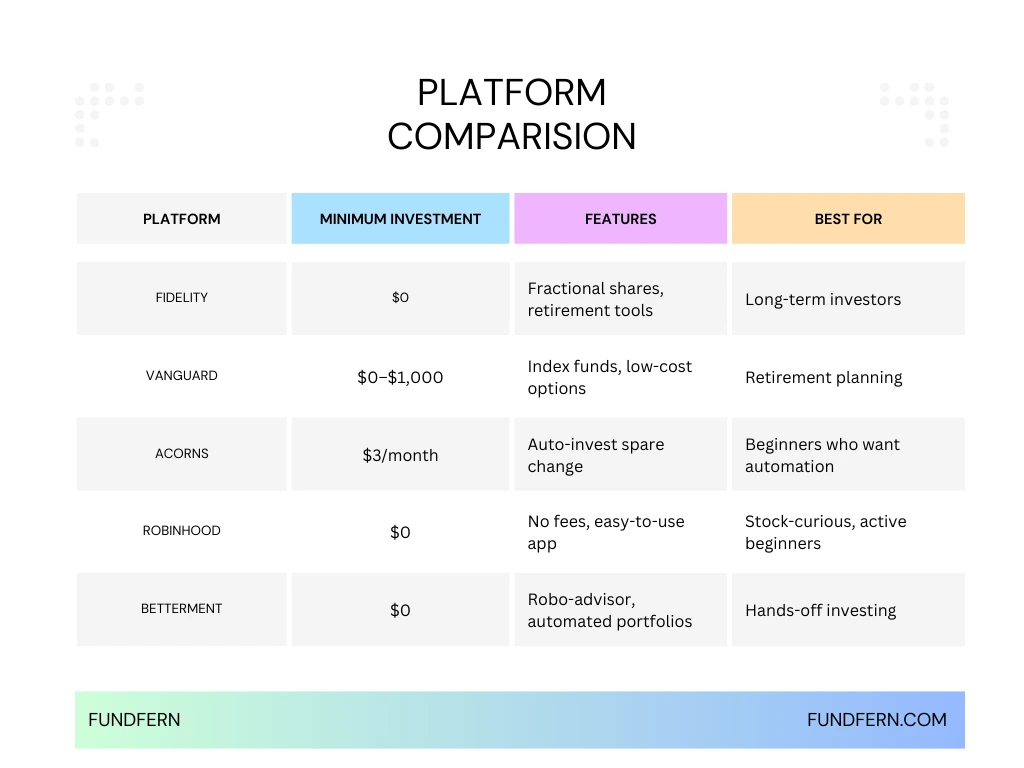
Pick a platform that aligns with your comfort level. If you like simplicity, robo-advisors may be your friend. Prefer control? Go with a brokerage app.
Types of Investments, Explained Simply
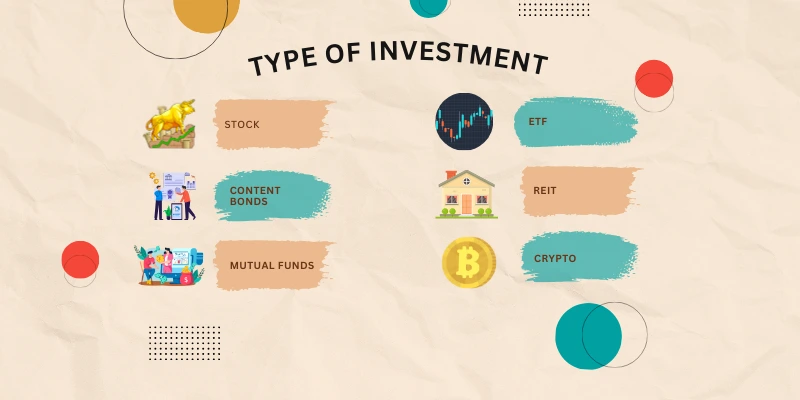
Here are the most common ways people invest their money:
- Stocks – Buy a piece of a company. Higher risk, higher potential return.
- Bonds – You lend money to a company or government and earn interest. Lower risk, more stability.
- Mutual Funds – Professionally managed investment pools that buy a mix of assets.
- ETFs – Like mutual funds, but typically lower fees and traded on the stock market.
- REITs – Real Estate Investment Trusts let you invest in real estate without owning property.
- Crypto – Digital currencies like Bitcoin. Highly volatile. Approach with caution.
Which Type Is Best for You?
If you’re just starting, index funds and ETFs are often recommended because they offer instant diversification, are low-cost, and are easy to manage. Many retirement accounts (like a Roth IRA) allow you to invest in them automatically.
How to Choose the Right Investment for Your Goals
Start by asking:
- What’s my goal? (Retirement, home, long-term wealth)
- When will I need this money? (Short-term vs. long-term)
- How comfortable am I with risk? (Market dips happen—can you ride them out?)
If your goal is long-term (10+ years), you can typically afford more stock exposure. For short-term goals, stay more conservative.
5 Steps to Start Investing (Even If You’re Nervous)
- Choose a platform
Look for low fees and beginner-friendly features. - Open an account
You can usually do this online in 10–15 minutes. - Deposit a small amount
Don’t wait until you “have enough.” Start with what you can. - Pick a diversified investment
Index ETFs are a strong, low-stress choice. - Automate contributions
Set up monthly deposits so you invest without thinking about it.
Mistakes to Avoid When You’re New to Investing
- Trying to time the market – Even professionals can’t do this reliably.
- Investing money you’ll need soon – Only invest what you can leave untouched.
- Freaking out when the market dips – It’s normal. Markets recover.
- Following hot tips from the internet – If you don’t understand it, don’t invest in it.
- Ignoring fees – They add up. Choose low-fee funds and platforms.
Building Your First Investment Plan
It doesn’t have to be complicated. Start with this structure:
- What am I investing for?
- How much can I invest each month?
- Which account will I use? (Roth IRA? Brokerage?)
- What type of investment suits me?
- How will I check in on my progress? (Set a yearly review)
Write it down. Keep it simple. You’ll build confidence faster than you think.
TL;DR: Investing Summary Checklist
- Understand your risk and goals
- Start small and stay consistent
- Use low-cost, diversified investments
- Automate investing
- Reinvest dividends
- Tune out short-term noise
- Review your plan annually
- Keep learning
Frequently Asked Questions
Want to Go Deeper?
- Not sure how much you can invest? Try our Monthly Budget Calculator
- Want a full plan for your financial life? Read our Grow Easy Guide
You don’t need to be perfect. You just need to begin. Your future self is already smiling.